Starting a business often requires significant investment, discouraging many aspiring entrepreneurs. Costs like inventory, marketing, and store setup can make launching a business seem out of reach.
However, with the right approach, you can start a dropshipping business for free without buying inventory in advance. By pairing a supplier platform with no monthly subscription fee, free product research tools, and organic marketing, you can launch an online store with $0 upfront inventory cost—only paying for products, shipping, and any paid selling platform as orders come in.
With a practical plan, anyone can learn how to start a dropshipping business for free by investing time in product research, store setup, and organic customer acquisition instead of paying for bulk stock or ads upfront.

Key Takeaways
- Start with no upfront inventory costs using free store trials and suppliers with no monthly fees. Budget for products, shipping, and payment processing as orders come in.
- EPROLO offers a free platform, no minimum order quantity (MOQ), global warehouses, and tools for product imports, order fulfillment, and tracking updates.
- Attract customers without paid ads through short-form videos, SEO, email, and online communities. Reinvest early profits to grow your store.
Table of Contents
What Is Dropshipping?
Starting a new eCommerce business typically involves purchasing merchandise, managing warehouses, and handling shipment responsibilities. But the dropshipping business model functions through an alternative method.
With dropshipping, sellers can provide products to customers by bypassing inventory management and handling shipping. Dropshipping stands as the simplest way to start a business through online sales with minimal financial requirements.
How Does Dropshipping Work?
Dropshipping operates by connecting third-party suppliers with their customers. A customer places an order with the store. The store then sends the order to the supplier, who sends the product directly to the customer. Sellers only need to list and market products while dropshipping suppliers manage everything else. Choosing reliable dropshipping suppliers is therefore essential.
For those looking to start a business with no money, this model makes it possible. By combining suitable dropshipping suppliers with a no-cost e-commerce platform, anyone can start online sales immediately.

Is It Really Possible to Start Dropshipping for Free?
Yes, it is possible to start dropshipping for free, but it requires strategic planning and resourcefulness. You can launch a dropshipping store with $0 upfront inventory, provided you understand which expenses are avoidable at launch versus when orders come in. You can keep initial setup costs at zero by choosing a supplier with no monthly subscription fee, using free research and design tools, and attracting customers through organic marketing.

The table below shows which costs you can avoid when getting started and which ones you'll need to cover as you make sales:
| Cost | Can You Avoid It at First? | What to Know |
|---|---|---|
| Supplier subscription | Yes | Choose a supplier platform that doesn't charge a monthly fee, such as EPROLO. |
| Bulk inventory | Yes | You don't need to buy products in bulk before you've tested demand. |
| Products and shipping | No (paid per order) | Once a customer places an order, you pay the supplier to fulfill it. You may need some cash on hand if the customer's payment hasn't reached your bank account yet. |
| Store subscription | Sometimes | Some platforms offer free trials or free website builders, but you'll need a paid plan to accept payments once the trial ends. |
| Custom domain | Yes, initially | You can start with a platform-provided URL, where available, and buy a custom domain later. |
| Payment processing | No (deducted per sale) | Payment providers charge a fee for each transaction. |
| Marketplace fees | No, when applicable | Marketplaces may charge listing, referral, or transaction fees when you make a sale. |
| Paid advertising | Yes | You can use social media, SEO, blog posts, and online communities to attract your first customers without paying for ads. |
| Samples, refunds, and replacements | Not always | Ordering samples is optional, but it's a good way to check product quality. It's also a good idea to set aside some money for refunds, returns, or replacement orders. |
How to Start Dropshipping for Free
Building an online business without upfront capital requires proper planning and suitable tools. Here is a step-by-step guide to help you ensure you dropshipping business takes flight.
1. Choose a Niche and Find Winning Products
A dropshipping niche represents a specific market segment that can be served by dropshipping products. It helps sellers identify the right products and create a focused business strategy. Picking a niche that matches customer needs is an important first step when starting dropshipping for free.
A profitable niche demonstrates high demand coupled with low competition levels and multiple opportunities for customer return business. Here are some tips for choosing a dropshipping niche:
- Look for trending products: Free tools such as Google Trends, TikTok, and Amazon Best Sellers enable users to recognize products with rising popularity trends. Fast sales come from trends, although strategic product choice leads to enduring success.
- Check demand and competition: A profitable niche needs consistent customer interest and low competition. You can assess customer interest and competition through understanding keyword search volume and researching competitors on platforms.
- Avoid overly broad markets: A narrow market segment will enhance your ability to reach the right customers. The market is better served by selecting specific niches such as minimalist jewelry or eco-friendly activewear.
- Consider evergreen products: Add products that maintain consistent demand throughout the year to your store, as they help your revenue be more constant. Popular dropshipping niches include clothing, beauty products, fitness gear, and pet supplies.
The correct selection of a specific market segment creates the base for making a profitable store. With thorough research, you can find products that sell well and boost your confidence.

2. Partner with Reliable Dropshipping Suppliers
Dropshipping suppliers are key to successful orders and customer satisfaction. The right supplier offers quality products, fast shipping, and support. To start for free, choose suppliers with no fees, like EPROLO, or low subscription costs. Consider these factors:
- Wide Product Range: A supplier who provides diverse products allows businesses to perform product tests while expanding offerings without needing to change suppliers. A flexible product selection system enables successful growth of stores.
- Quality Products: Customer satisfaction depends on product quality. A good supplier should offer reliable products, precise descriptions, and easy-to-understand images. The more accurate your listing, the fewer complaints and return requests from customers.
- Delivery Time: Fast shipping improves the buying experience. Suppliers with strategic warehouses and carrier relationships reduce shipment times.
- Excellent Customer Service: Issues can arise at any stage, so a responsive supplier is essential. Choose suppliers with quick support, effective problem resolution, and clear communication channels. This lays the foundation for your customer service success.
- Transparent Shipping, Return, and Payment Policies: Hidden fees, unclear return processes, or unexpected shipping delays can lead to customer dissatisfaction. A reliable supplier has clear policies together with fair contractual terms.
- Positive Reviews: Check reviews from different dropshippers to learn if your suppliers are reliable. A trustworthy supplier can be determined through consistent high ratings, positive feedback, and a proven track record.
Partnering with the right dropshipping supplier ensures smoother operations and higher customer satisfaction. Find suppliers through directories, social media, blogs, and trade shows. Focus on these factors to start dropshipping for free with confidence.
3. Set Up an Online Store
When starting a dropshipping business for free, choosing the right platform is crucial. There are two main options: marketplaces and customizable websites. Marketplaces offer instant access to a large audience, but you face product and branding restrictions.
Platforms like Shopify and Wix let you build customizable websites, allowing full branding and pricing control. However, you’ll need to drive traffic. Choose a platform that aligns with your business goals, as each has its pros and cons. Here are some popular choices for you:
| Platform | Starting Cost | Additional Fees | Important Note |
|---|---|---|---|
| Shopify | 3-day free trial, then $1/month for 3 months (where offered) | Basic: $39/month or $29/month billed yearly after promotion; processing fees | Paid plan required to keep selling. See pricing. |
| Amazon | $0.99/item (Individual) or $39.99/month (Professional) | Category-based referral fees | You must follow Amazon's seller-of-record and packaging rules. See fees. |
| Etsy | Listing fees | Transaction fees | General dropshipping isn't allowed, with limited exceptions for craft supplies and qualifying original designs. |
| TikTok Shop | Seller eligibility applies | Category commissions and fulfillment costs | Meet dispatch and tracking requirements; third-party fulfillment is allowed if you own the inventory. |
| Wix | Free website builder | Paid plan to accept online payments | Build and test your site before upgrading. |
Shopify
Shopify lets sellers build fully customized online stores. It integrates seamlessly with dropshipping providers like EPROLO, automates orders, and offers marketing tools. Shopify also provides secure payment options and a professional storefront, making it ideal for building a long-term brand.
Shopify currently offers a 3-day free trial, then $1/month for 3 months, so you can start dropshipping for free during the trial. While it gives full control over branding and pricing, sellers must drive their own traffic by themselves. This can be time-consuming.
Amazon
Amazon is one of the largest marketplaces, giving sellers access to a huge customer base. It helps generate sales with little marketing effort. The platform is trusted, and listings can go viral. Selling trending or high-demand products on Amazon is a great way to start without creating a website.
However, competition is intense, with thousands selling the same products. Referral and fulfillment fees can be high, reducing profit margins. Additionally, Amazon controls customer relationships, leaving sellers with no control over branding or repeat business.

Etsy
Etsy is ideal for selling handmade, vintage, or unique products. Its audience is niche and values creativity and originality, making it easier to gain traction in certain categories compared to Amazon. Etsy isn't a general-purpose dropshipping marketplace, so check its dropshipping and reselling policy before listing products.
Dropshipping on Etsy is free, but it charges listing and transaction fees that can add up over time. The platform has strict policies, and competition increases as more sellers join. Etsy is great for niche products but may not be the best for general dropshipping stores.
TikTok Shop
TikTok Shop is a new ecommerce platform that lets sellers sell through short-form videos. Its algorithm can push content to millions, making it great for starting dropshipping with no money. For sellers with marketing skills, TikTok is a great opportunity for attracting organic traffic and sales. For tips on promoting your dropshipping business on TikTok, check out our guide on how to start dropshipping on TikTok.
However, success on TikTok requires consistent engagement and content creation. Unlike Shopify or Wix, TikTok doesn’t offer full storefront control, and policy changes can affect sellers. While it’s a powerful tool for viral marketing, it demands ongoing effort to maintain sales.
Wix
Wix is an easy-to-use website builder that lets sellers create unique stores without coding skills. Its free plan works for basic websites, and the drag-and-drop interface makes customization simple. Wix is a budget-friendly option, offering flexibility to match a brand’s identity.
However, upgrading is required to unlock eCommerce features, meaning free users can’t accept sales. Wix also has fewer dropshipping supplier integrations than Shopify, making automation and scaling harder. It’s a good starting point, but those looking to grow will eventually need a more advanced platform.

4. Add Products to Your Store
Once the platform is set up, the next step is adding products. This includes recording customer details, forwarding orders to suppliers, and uploading tracking numbers. Manual importing is time-consuming, but working with suppliers with automation tools, like EPROLO, can sync products automatically. These tools eliminate the need to manually upload images, descriptions, and pricing.
Automation speeds up the process, but reviewing product details is essential to match the brand’s voice and customer expectations. A compelling product listing attracts buyers. High-quality images and well-written descriptions help customers make informed choices. Instead of using generic supplier descriptions, rewriting them to highlight product benefits makes a listing stand out.
Optimized listings improve search visibility and attract more buyers. Competitive pricing is also crucial, balancing affordability with a healthy profit margin. A well-structured store with organized categories, engaging descriptions, and strong visuals can build trust with customers. Taking time to optimize product listings is key to starting a professional dropshipping business for free.
5. Market Your Products
Good store design and high quality products are useless without the right marketing. There are a number of marketing strategies that can attract and earn customer trust. Starting a dropshipping business for free is easier with free marketing channels. These channels help reach a wide audience without upfront costs.
Social Media
Using social media is a powerful way to sell products without spending money. Posting engaging content on TikTok, Instagram, and Facebook attracts potential customers. Short-form product videos perform well, especially with trending sounds and hashtags.
Live streams, interactive polls, and giveaways help boost engagement. Sharing product updates, customer testimonials, and behind-the-scenes content increases brand awareness. Comments, groups, and collaborations with micro-influencers improve visibility. Consistent activity is essential for social media marketing. The right approach can drive significant traffic to your store.
SEO
Organic traffic increases when a store’s rank on Google and other search engines improves through SEO. Optimizing product titles, descriptions, and blog posts with relevant keywords improves search visibility. Writing blog posts, such as product comparisons and buying guides, to drive additional traffic.
A well-structured site with fast loading speed and mobile-friendly design also boosts SEO rankings. Backlinks from credible sites increase authority and keep visitors engaged longer. SEO takes time to show results; once a store starts to rank well, it becomes a free and steady traffic.
Email Marketing
Email marketing helps you convert first-time visitors into repeat buyers. Build an email list with a simple welcome discount sign-up offer, then send product updates, promotions, and abandoned-cart reminders. Choose from email marketing service providers with a free starter tier that fits your list size.
Segmenting subscribers by their interests or purchase history makes campaigns more relevant. A clear email marketing strategy strengthens customer relationships and drives repeat sales without extra traffic spend.
Forums and Communities
You can meet potential customers online in forums and niche communities. Reddit, Quora, and Facebook Groups allow business owners to participate in discussions. Instead of directly promoting products, offer helpful advice and answer questions to establish credibility.
Gaining trust in customers makes product recommendations more natural and increases sales. These strategies help create a branded community, like a private Facebook group, to build customer loyalty. Active participation, sharing expertise, and providing solutions attract organic traffic. Forums and online communities are long-term marketing channels that lead to steady sales.

6. Fulfill Orders Quickly
Fast order fulfillment is key to customer satisfaction and repeat customers. Ensuring buyers receive their products on time can reduce complaints and refunds. Dropshipping fulfillment relies on third-party suppliers, requiring efficient coordination. Choosing suppliers with fast shipping is essential.
Once an order is placed, send an immediate order confirmation and sync tracking numbers automatically as soon as the parcel dispatches. Keep your supplier’s support contacts handy, identify backup suppliers for hero items, and publish a clear Shipping & Returns Policy before launching.
A strong dropshipping fulfillment leads to positive reviews and strengthens a store’s reputation. Reliable shipping creates trust and encourages customers to return in the future.
7. Provide Excellent Customer Service
Good customer service is key to a positive customer experience and repeat purchases. In dropshipping, suppliers handle product storage and shipping, while sellers remain responsible for customer communication. Responding clearly and promptly builds buyer confidence.
Use a website FAQ section, automated order emails, and a free live-chat widget (such as Tawk.to) to answer routine questions about delivery times and returns quickly. Great post-purchase support turns first-time shoppers into loyal advocates.
8. Optimize Your Store
The dropshipping business is not a ‘set it and forget it’ type of thing. Continuous optimization makes your store competitive and helps prevail in the future. Monitoring and regularly optimizing your store can increase conversions. Here are several tips for optimizing your business:
Analyze Sales Performance Regularly
Use built-in store analytics alongside free tools such as Google Analytics and marketing performance analytics platforms to monitor conversion rates, best-selling products, and net margins per SKU.
Expand Product Lines Gradually
Once a hero product sells consistently, add complementary items that fit your niche—for example, pairing reusable water bottles with replacement lids or cleaning brushes—to increase Average Order Value (AOV).
Reinvest in Ads to Boost Sales
Reinvesting part of your profits into Google Ads or TikTok ads can help you test paid reach for products that have already shown demand. Set a clear budget and track the cost of acquiring each customer before increasing spend.
Leverage Automation Tools
Choose automation tools that reduce repetitive work rather than adding unnecessary monthly costs. With EPROLO, sellers can import products, sync store orders, manage inventory, and synchronize tracking numbers with connected stores. These tools can reduce repetitive order-management tasks and leave more time for product research and marketing.

Best Free Dropshipping Suppliers to Work With
Finding the right dropshipping supplier is essential for running a successful store. A good supplier offers quality products, competitive pricing, and reliable shipping.
Several platforms provide free access to their services, making it easier to start dropshipping without upfront costs. Among them, EPROLO stands out as one of the best options for new and experienced sellers.
| Supplier | Fulfillment Model | Platform Fee | Best For |
|---|---|---|---|
| EPROLO | Product sourcing, global fulfillment | $0 platform fee; pay per order | All-in-one dropshipping, fast US shipping & branding |
| AliExpress | Marketplace of individual suppliers | No subscription; product and shipping costs vary | Wide product selection & supplier comparison |
| Inkedjoy | Print-on-demand | Check current plan terms; product and fulfillment costs apply | Custom apparel, accessories & home decor |
| Printful | Print-on-demand | $0/month Free plan; Growth: $24.99/month; product and shipping costs extra | Custom products & branded merchandise |
EPROLO and AliExpress source ready-made products, while Inkedjoy and Printful focus on print-on-demand (POD). POD is a different fulfillment model. Compare the total cost (product, printing, and shipping) and delivery time for your target market. A free account doesn't mean products or fulfillment are free.
EPROLO
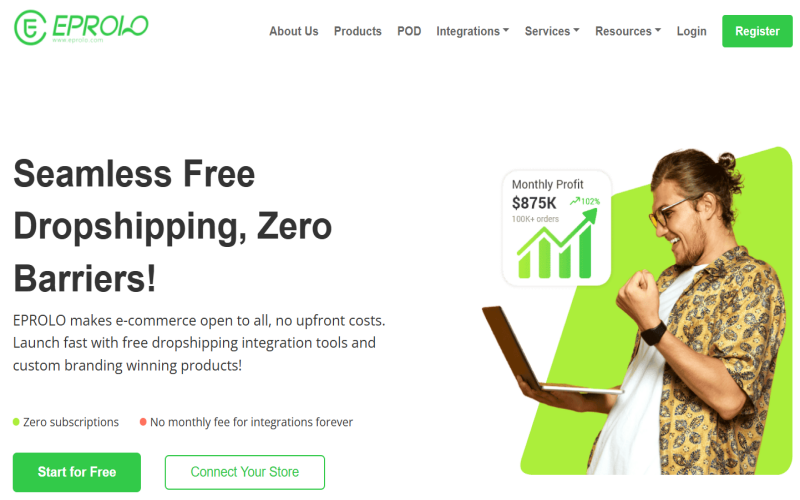
EPROLO is an all-in-one dropshipping and fulfillment platform whose core platform is free to use, with no membership or monthly subscription fee. Sellers pay for products and shipping when they submit fulfillment orders. Optional custom branding services may involve additional charges.
A major advantage includes its global warehouses, offering fast shipping to your customers worldwide. Among them, the US warehouse stands out as a key hub for faster domestic deliveries. Sellers can access over 10,000 products through the US warehouse, ranging from fashion and beauty products to electronics and home goods. Shipping directly within the US warehouse ensures fast delivery to your US customers, improving the overall shopping experience.
For TikTok Shop owners, take advantage of EPROLO’s US warehouse helps you complies with the platform’s policies. It also provides specialized fulfillment services for Amazon FBA and FBM.
The platform integrates with popular e-commerce stores like Shopify, streamlining product imports, order fulfillment, and tracking updates.
Sellers can also take advantage of branding support, which adds a professional touch to your business. For sellers who want to sell custom products, EPROLO also offers print-on-demand service. You can customize products like clothing, accessories, gifts, and more.
Moreover, there is no minimal order quantity (MOQ), so startups and small businesses can easily test products without financial strain.
AliExpress
AliExpress is popular for its massive product selection and low prices. It connects sellers directly with manufacturers, offering millions of products across different categories with no subscription fees. However, shipping can take weeks, and product quality varies, so checking supplier reviews is essential.
Inkedjoy
Inkedjoy is one of the best platforms specializing in print-on-demand services. Sellers can turn creativity into actual products like hoodies, mugs, or home decor. The platform handles everything from printing to shipping, allowing creators to focus on designing unique items without worrying about inventory or logistics. With a user-friendly interface and a wide range of customizable products, Inkedjoy makes it easy for entrepreneurs to launch their own branded merchandise quickly and efficiently.
Printful
Printful is ideal for selling custom, print-on-demand products like t-shirts and mugs. There are no upfront costs since products are printed and shipped after a sale. While prices are higher than bulk orders, Printful’s high-quality prints and branding options make it a strong choice for personalized merchandise.
Start Your Dropshipping Business for Free Today
Learning how to start a dropshipping business for free comes down to making informed choices at every step. A focused niche, a supplier with no monthly platform fee such as EPROLO, clear unit-cost calculations, and consistent organic marketing can help you test a store with limited upfront spending.
Many platforms offer free trials or budget-friendly options, making it possible to launch without upfront costs. As orders come in, reinvesting profits into ads and automation helps scale the business..
Growth won’t happen overnight, but with consistency and effort, dropshipping can become a sustainable source of income. By taking advantage of free tools and strategies, building a successful business without an initial investment is achievable.
FAQs
1. How do I start dropshipping with no money?
You can start by using free platforms like EPROLO for product sourcing and Shopify’s free trial for store setup. Promote products through free marketing methods like social media, SEO, and forums.
2. Is it possible to earn in dropshipping in your first month?
Yes, it is possible, but it depends on your niche, marketing efforts, and supplier efficiency. Many sellers make their first sales within weeks by leveraging trending products and effective promotion.
3. What are the different dropshipping fees?
Dropshipping fees can be different depending on the platforms and tools you choose. Common costs include selling channel fees, such as transaction fees on platforms like Amazon and Etsy. Optional paid marketing campaigns and premium e-commerce tools. However, you can operate with minimal costs using free resources.
5. Can you start dropshipping for free?
Yes. You can launch with $0 upfront inventory by using a zero-monthly-fee supplier like EPROLO, starting on a free store trial or pay-per-sale marketplace, and attracting visitors through organic marketing. You will still need working capital to fulfill customer orders, plus funds for payment processing fees and any paid store plan you choose.
Read More
Written by
Carry
With over 10 years of e-commerce experience, Carry specializes in dropshipping, website management, and marketing strategies. She provides actionable insights that help online sellers grow, optimize their stores, and succeed in a competitive marketplace.